.webp)

Does Your Bus Need Repair? 7 Warning Signs to Watch For
Learn seven common warning signs that your bus needs repair, from braking and overheating issues to fluid leaks, rough shifting, warning lights, and suspension problems.
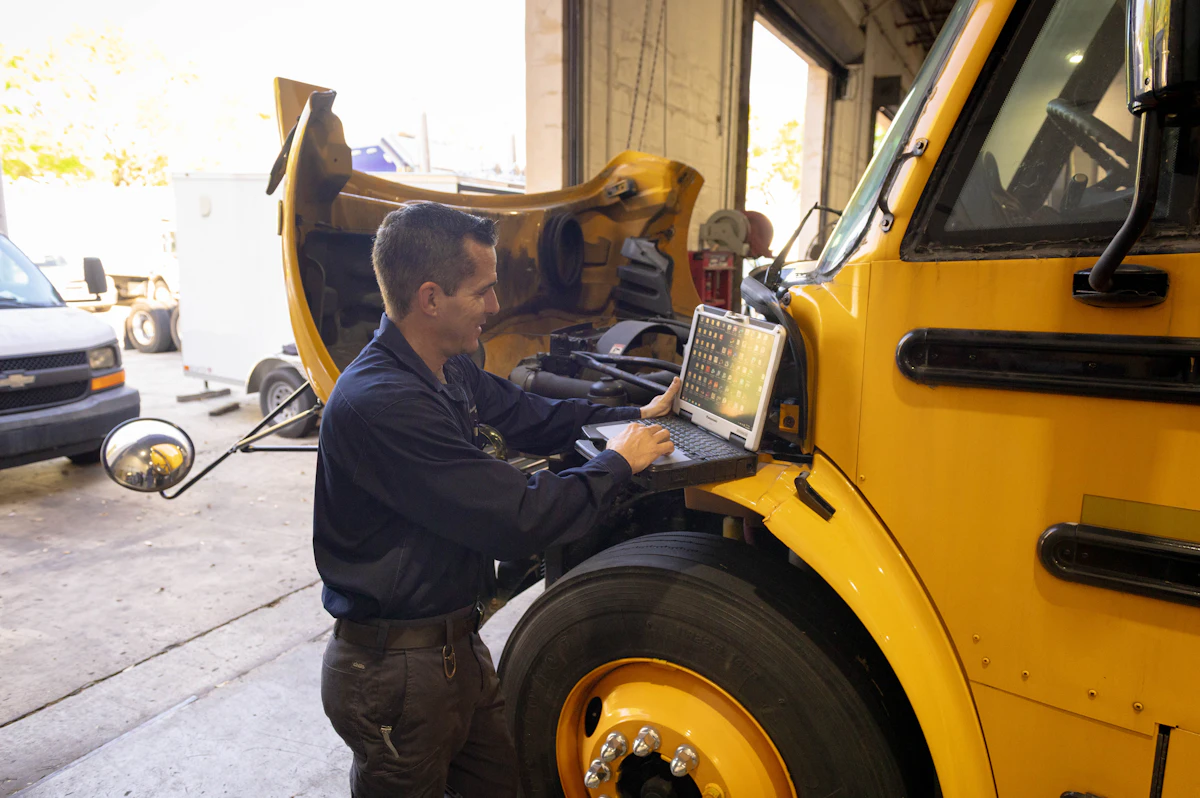
The thing about operating a bus is that it rarely goes from running perfectly to broken down without giving you a few hints first. Whether it's strange noises, flickering warning lights, a different ride, or the engine running hotter than usual. There will be signs
Spotting those symptoms early can help you address a developing problem before it causes a breakdown or puts a bus out of service. That matters whether you operate a school bus, motorcoach, shuttle, or another passenger-carrying vehicle.
Understanding the most common signs that you need bus repair gives you a valuable head start. Here are seven warnings you shouldn't ignore.
1. Your Bus Is Running Hotter Than Normal
Keep an eye on that temperature gauge. A diesel engine produces considerable heat, and its cooling system constantly transfers that heat away from critical engine components.
Coolant circulates through the engine, absorbs heat, and travels to the radiator, where airflow helps dissipate it. Components such as the water pump and cooling fan help keep that process moving.
If the temperature begins climbing beyond its normal operating range, you could have problems involving the diesel cooling system, including coolant loss, a malfunctioning water pump, restricted radiator airflow, or fan-related trouble.
Don't simply keep driving and hope the temperature comes back down. Overheating can turn a cooling-system problem into much more extensive engine damage.
2. Braking Feels or Sounds Different
When you're transporting passengers, braking problems deserve immediate attention.
Many medium- and heavy-duty vehicles rely on compressed-air braking systems. In a drum-brake configuration, compressed air enters the service chamber and moves a diaphragm and pushrod. The slack adjuster then rotates the S-cam, pushing the brake shoes against the drum to create the friction needed to slow the vehicle.
Problems anywhere in that process can affect air brake performance.
Watch for unusual stopping behavior, abnormal noises, changes in pedal response, or other braking characteristics that don't feel right. Instead of brushing them off as normal wear, have a technician inspect the system. A qualified technician can determine whether you're dealing with worn components, an air-system problem, or another issue requiring bus brake repair.
3. Warning Lights Keep Appearing
Modern diesel buses rely heavily on electronic controls and sensors. So, when a warning light appears, your bus is telling you something.
The problem might involve the engine, electrical system, emissions equipment, or another electronically monitored component. Guessing at the cause isn't the best approach.
Professional diesel diagnostics can help technicians retrieve fault information and narrow down the source of the problem. That's especially useful when the bus still seems to operate normally despite the warning light.
And here's the kicker: clearing a light without fixing the underlying cause doesn't help. If the warning keeps returning, schedule an inspection.
4. You Notice Excessive Exhaust or Emissions Problems
Modern diesel after-treatment systems use several components to control emissions, including the EGR system, diesel particulate filter (DPF), diesel oxidation catalyst (DOC), and selective catalytic reduction (SCR) system.
The DPF captures particulate matter and periodically removes accumulated carbon through regeneration. The SCR system uses diesel exhaust fluid (DEF) to reduce nitrogen oxide emissions.
When something goes wrong, you may notice warning lights, regeneration problems, reduced performance, or unusual exhaust behavior.
A malfunctioning DPF system isn't something you want to put on the back burner. Sensor failures and other problems can interfere with regeneration, and some situations may require professional diagnosis or a forced regeneration.
5. The Bus Vibrates, Pulls, or Handles Differently
Your driver knows how the bus normally feels. Pay attention when that changes.
New vibration, unusual bouncing, pulling, or poor handling can point toward problems with the tires, wheel ends, suspension, alignment, or driveline.
Shock absorbers help manage road impacts and control wheel rebound, while the suspension supports the vehicle's weight and distributes that load across its components. Bearings also allow wheel assemblies to rotate while minimizing friction.
Bearing trouble deserves particular attention. Excessive friction can generate substantial heat, while advanced failure may produce harsh metal-on-metal noises.
If you notice persistent bus suspension problems, vibration, or abnormal handling, have the vehicle checked before continuing regular routes.
6. Shifting Has Become Rough or Unpredictable
Your transmission transfers and optimizes engine power before it moves through the rest of the drivetrain. When that process isn't working correctly, you'll usually feel it.
Hard shifts, slipping, hesitation, or unusual gear changes can signal developing transmission problems.
Depending on the transmission, potential causes can include fluid issues, component wear, clutch-related problems, or excessive operating temperatures. Slipping gears, hard shifting, and overheating are common signs of transmission trouble.
Don't wait until the bus refuses to move. Early diagnosis may give you more repair options and help prevent additional damage to an already stressed transmission.
7. Fluids Are Leaking or Levels Keep Dropping
A puddle underneath your bus isn't decoration.
Heavy-duty vehicles rely on several fluids for lubrication, cooling, and hydraulic operation. Engine oil lubricates internal engine components, coolant transfers heat, transmission fluid or gear oil protects transmission components, and power steering fluid supports hydraulic steering operation.
That's why fluid leaks warrant investigation.
Check where the fluid appears, but don't rely on color or location alone to diagnose the problem. Multiple systems and lines run throughout a bus, and fluid can travel before reaching the ground.
Repeatedly topping off a low reservoir isn't a permanent solution either. If the level keeps dropping, find out where the fluid is going.
Why Preventive Maintenance Matters for Buses
You don't have to wait for one of these seven symptoms to appear.
Preventive maintenance takes the opposite approach. Routine inspections, fluid checks, brake evaluations, tire inspections, and other scheduled services can uncover potential problems before they become major failures. To reduce breakdown worries, keep up with preventive maintenance to lower risk and extend the operational life of heavy vehicles.
For fleet operators, that approach can also make maintenance easier to plan. Instead of reacting to an unexpected failure mid-route, you can address wear during scheduled downtime.
In Eastern Washington, seasonal temperature changes, long routes, and demanding operating conditions make consistent inspections particularly worthwhile.
Don't Ignore the Early Signs of Bus Trouble
A rising temperature gauge, unusual braking, warning lights, emissions problems, vibration, rough shifting, and fluid leaks all deserve attention. One symptom doesn't automatically tell you which component has failed, but it does tell you that your bus should be inspected.
If you've noticed one of these bus maintenance warning signs, schedule service before a small problem has a chance to grow.
Panhandle Truck & Equipment Repair provides bus repair in Eastern Washington for school buses, motorcoaches, and public transportation buses from its Tekoa, WA, facility. The shop also offers scheduled mobile service within a 100-mile radius of Tekoa.
Contact us to schedule an inspection and get your bus back in working order.

